Catalogue Request Form…!

The turkey red oil industry is growing, with sustainability, technological advances and changing market demands. With rising consumer demands for eco-friendly and high-performance chemicals producers are developing new processes to improve product efficiency, reduce waste and meet global quality standards. This piece covers how turkey red oil production, challenges and opportunities are all impacting the supply chain.
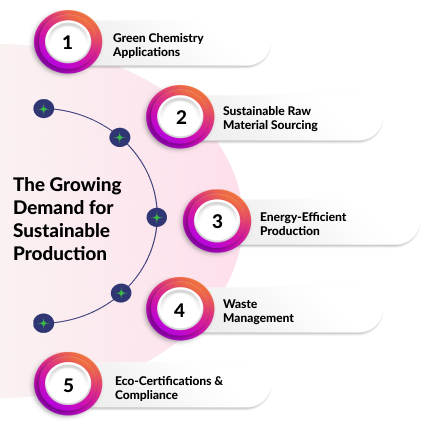
Sustainability is shaping the turkey red oil industry as environmental issues push manufacturers towards greener solutions. Production methods used traditionally involve high energy consumption and chemical waste but modern developments try to reduce the environmental impact of the industry. The search for renewable materials & eco-friendly processes is becoming a norm in global chemical industries.
For decades Turkey Red Oil has been used for Textile dyeing, leather treatment and soap production. However, the application areas are expanding due to its high-performance emulsification and solubility properties. It can dissolve in water or oil and is therefore an ideal ingredient for use in many sectors. Below are the key turkey red oil uses:
For more on how turkey red oil is made and its benefits and uses see our guide: How to Make Turkey Red Oil. This article details the practical applications and benefits of turkey red oil in various sectors.
Advanced chemical engineering has allowed purer, more stable and better-quality products through sulfonated methods. Automation and real-time monitoring devices have brought consistent quality and decreased human mistakes to sulfonated products.
Find the perfect turkey red oil formulation for your applications. Request a quote today!
The turkey red oil industry is challenged by low raw material prices, regulatory pressures and Market Dynamics. Since turkey red oil is made from castor oil, castor bean farming disruptions can affect production capability and pricing. Market volatility is caused by geopolitical factors, supply chain disruptions & severe weather.
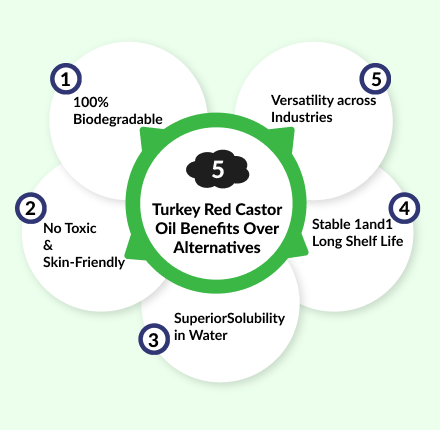
Despite market challenges, turkey red oil maintains a stronghold in multiple industries due to its biodegradability, non-toxicity, and superior emulsification capabilities. Compared to synthetic surfactants, which often contain harmful petrochemicals, turkey red castor oil stands out as a natural and skin-safe alternative.
For more information on the manufacturing process of Turkey Red Oil explore our in-depth article which will give you a detailed idea about the methods of producing this essential oil.
With sustainable production methods, technological advancements, and increasing applications in various sectors, the turkey red oil industry is transforming key industries. At Colourinn we continually strive to create high-quality turkey red olive oil for modern industries. As a leading turkey red oil supplier, we combine sustainable sourcing and continual research & advancement to bring you superior turkey red oil formulations. Whether textiles, pharmaceuticals, beauty products or manufacturing uses – we promote excellence, sustainability, and innovation for all our products. Contact us for more turkey red oil products or even customized solutions!
A. TRO acts as a wetting agent, helping pesticides and fertilizers spread evenly on plant surfaces, improving absorption and effectiveness.
A. Yes, Turkey Red Oil is biodegradable and considered eco-friendly, making it a preferred choice in industries seeking sustainable solutions.
A. Yes, it is commonly found in bath oils, soaps, and lotions due to its excellent emulsifying properties and ability to disperse in water.