Catalogue Request Form…!

Explore what green textiles are doing to reinvent the industry with sustainable textile finishing solutions.
This blog reviews the environmental issues related to the traditional finishing methods and the role of green chemicals and their benefits to the manufacturer, consumer, and planet.
Learn how textile manufacturing companies like Colourinn Auxiliaries provide innovative solutions to create responsible fabrics that meet global sustainability goals.
Wondering what is finishing in textile production? It is the vital final operation that converts raw fabrics into products having acceptable appearance, hand, and durability characteristics.
Textile finishing encompasses softening, dyeing, and the application of functional coatings such as water repellency or flame resistance.
These steps give the fabrics the requirements for their many different applications, ranging from fashion apparel to industrial textiles.
However, most traditional textile finishing processes use toxic chemicals, huge amounts of water, and/or energy-demanding techniques, inducing pollution and resource depletion.
Eco-friendly textiles address these issues by using sustainable chemicals and technologies, enabling textile manufacturing companies to produce high-quality fabrics with a lower environmental impact.
The industry meets consumer expectations and legislation by adopting greener practices.
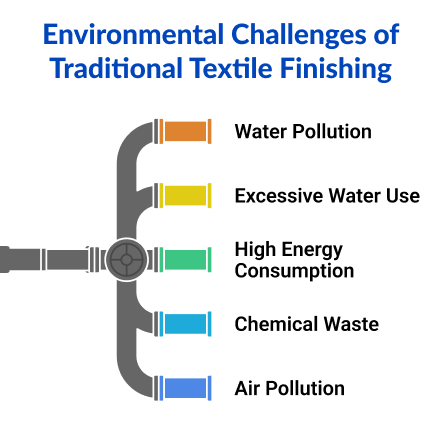
Traditional textile finishing processes cause huge environmental problems to ecosystems and resources.
All these issues have made textile manufacturing companies rethink their approach and now produce eco-friendly textiles in line with global sustainability standards such as the Zero Discharge of Harmful Chemicals initiative.
These challenges facing the industry can be met so as to reduce the ecological footprint while maintaining product quality.
Eco-friendly textiles use sustainable textile finishing chemicals that cause little environmental harm without sacrificing fabric performance.
These chemicals are developed to be biodegradable, non-toxic, and resource-efficient. Textile manufacturing companies use these solutions to create functional/sustainable fabrics. Innovations include:
Combining these solutions renders textile finishing processes more sustainable and enables textile manufacturing companies to satisfy consumers’ demands for environmentally responsible textile products within the framework of increasingly stringent regulations.
Textile finishes are classified by purpose and application to help manufacturers choose the right approach for each fabric:
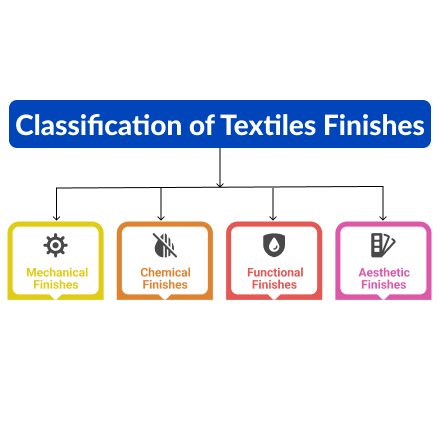
Eco-friendly textile finishing is concerned with chemical and functional finishes using sustainable compounds such as enzymes or bio-based polymers.
These finishes have low environmental impact while meeting performance standards for fabrics, which is a core component of eco-friendly textiles used by textile manufacturing companies
Adopting eco-friendly textiles with sustainable textile finishing has many advantages for manufacturers, consumers, and the environment:
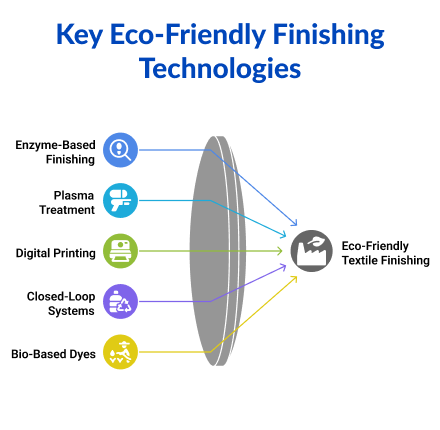
Innovative technologies drive eco-friendly textiles into textile finishing:
Textile manufacturing companies face challenges when switching to eco-friendly textiles in textile finishing:
The following steps can help textile manufacturing companies to use eco-friendly textiles in textile finishing:

At Colourinn Auxiliaries, we are committed to eco-friendly textiles development through innovative textile finishing solutions
This guide describes what finishing is in textile production, the classification of textile finishes classification and how sustainable chemicals have an environmental impact.
Our biodegradable dyes, enzyme-based finishes, and closed-loop systems produce prime quality fabrics using less water, less energy, and less pollution.
Want to produce high-performance textiles? Contact Colourinn Auxiliaries today to know more about our eco-friendly textile finishing solutions.
See how we can help your brand thrive with environmentally responsible fabrics at www.colourinn.in. Build a greener textile industry together!
A. Textile finishing is the final process applied to fabrics to improve their appearance, texture, or functionality. It includes treatments like dyeing, softening, water repellency, and antimicrobial finishes that enhance performance and usability.
A. Conventional textile finishing uses toxic chemicals, excessive water, and high energy, leading to water pollution, carbon emissions, and chemical waste. This creates long-term environmental damage.
A. Eco-friendly textile finishing uses biodegradable, non-toxic, and resource-efficient chemicals. Examples include enzyme-based finishing, plasma treatment, low-temperature dyes, and closed-loop water recycling systems.