Catalogue Request Form…!

Developing fabrics that are smooth and offer comfortable stretch has become a must for textile mills wanting to compete. Silicone softeners provide these qualities by altering the fibre surface gradually and permanently.
Designed to improve handle, drape, and support elasticity without compromising colour, strength or process efficiency. How silicone softeners behave with different fibres, performance benefits they provide, variations including hydrophilic grades and practical considerations when applying on production lines are described.
It also describes how Colourinn supplies mills with consistent, real manufacturing silicone softener solutions.
Textile finishers choose silicone softener as it addresses key fabric handling issues. These compounds form a flexible layer on fibres, smoothing out rough edges during weaving or dyeing. This layer builds immediate benefits, and can withstand wear and laundering.
In high-volume runs, industry reports indicate that silicon softener for textiles reduces production defects by as much as 20%. Mills put it on everything from cotton shirts to synthetics, on products that buyers want to touch and move.
The feel of a fabric draws customers in at first glance. Silicone softener does this by reducing friction between fibers, making stiff cloth soft and supple. Studies show treated fabrics perform 30-50% better than untreated fabrics on hand feel tests.
Then the softener polymer chains align along the fiber surface like natural lubricants. So for everyday items from t-shirts to towels that means less irritation and greater comfort. Silicone fabric softener raises the sensory experience so producers report faster sales.
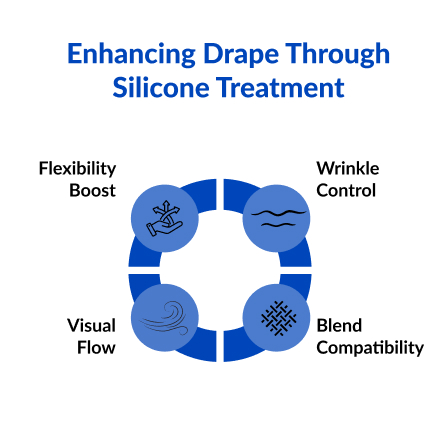
For dresses or curtains, drape means how the fabric falls and flows. Silicone softener refines this by increasing fiber flexibility so cloth can take shape. Textile labs report 15-25% improvement in drape coefficients after application.
This softener loosens tightly woven weaves for even weight distribution. Designers love this for creating clean lines. In production, silicone based fabric softener prevents bunching during sewing.
Elasticity allows fabrics to stretch and snap back – important in activewear or fitted sheets. Silicone softener enhances this by acting as a molecular bridge for fiber rebound. Durability tests show up to 40% higher recovery rates in treated ether blends.
They distribute stress evenly to prevent permanent deformation. For garments that move with your body, athletic brands use this. Hydrophilic silicone softener adds moisture management without losing bounce!
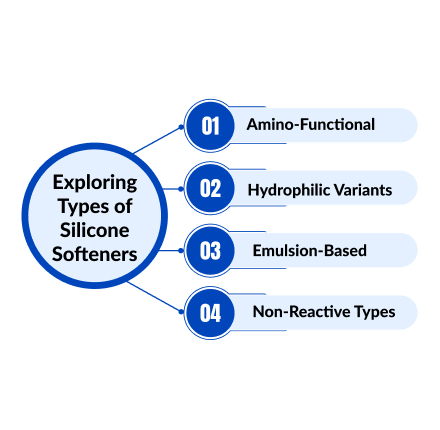
All silicone softener works differently. Variations address different needs – from basic lubricant to advanced wicking. For deep softness, amino-modified types are best at adhesion while hydrophilic silicon softener contains polyether chains for improved water adhesion.
What’s right depends on the end product. Silicone softener manufacturers that offer emulsion forms help with selection with tailored blends. This range supports absorbent towels as well as tough upholstery applications.
Silicone softener for textile application requires precision. Common techniques are padding – fabric goes through trough & squeeze rollers – or exhaustion in bath – to get even uptake. The coating temperature is set at about 120-150°C during curing.
Dosage ranges from 1-3% by fabric weight. Mills adjust using machinery. Liquid silicone fabric softener for continuous lines or powder for smaller operations.
Even reliable tools like silicone softener have problems with uneven distribution or wash-off. High pH destabilizes emulsions and can lead to spotting. The foam from mixing interrupts flow, but defoamers correct this. Cross-linking agents increase silicone softener wash durability. Producers check water hardness for precipitation avoidance.
Silicone softener is unique in its ability to refine fabric feel drape and elasticity through smart chemistry and application. With silky touches to lure buyers and resilient stretches to withstand daily wear, these agents answer the call of contemporary textiles.
You can see how hydrophilic silicone softener and other variants solve real production puzzles and ensure quality control over runs.
As top silicone softener manufacturers, we customize products like our emulsion-based silicone fabric softener. Check out our range at colourinn or send us a line for bespoke formulations.
Make your textiles memorable. Partner with us to finish them just right and make your textiles unforgettable.
A. Silicone softener is a polymer-based finishing agent applied to textile fibers to reduce friction, increase softness, and improve fabric drape and elasticity. It forms a flexible, durable layer on the fiber surface that enhances performance and comfort even after multiple washes.
A. Silicone softeners align along the fiber surface to create a smooth, lubricated layer. This reduces stiffness, improves hand feel by 30–50%, minimizes irritation, prevents abrasion, and gives fabrics a silky, premium texture.
A. Common types include:
Amino-functional silicone softeners provide long-lasting softness and strong bonding.
Hydrophilic silicone softeners improved moisture management and quick-drying properties.
Emulsion-based silicone softeners are easy to dilute and apply in bulk production.
Non-reactive softeners are ideal for delicate fibers like silk where minimal stiffness is required.