Catalogue Request Form…!

Typical Dyeing uses water and chemicals, which pollute and use resources. This article describes how sustainable dyeing uses fewer resources with waterless dyeing, bio dyes, and advanced auxiliaries.
Discussed are the benefits, applications, and challenges brought to you by Colourinn Auxiliaries, a specialist in environmentally friendly solutions for apparel, home textiles, and industrial fabrics.
The traditional dyeing is resource-intensive. One kilo of dyed fabric makes up to 200 litres of wastewater contaminated with synthetic dyes, heavy metals, and auxiliaries like salts.
Textile dyeing contributes to around 20% of global industrial water pollution, with annual effluent losses of 280,000 tons of dyes.
They harm aquatic life, reduce water transparency and biochemical oxygen demand (BOD) and thus disturb ecosystems.
Chemicals used in traditional dyeing are also carcinogenic, likes as dyes and chlorobenzenes.
Heated and rinsed fabrics add to the greenhouse gases produced – dyeing is a prime target for sustainability efforts.
Sustainable dyeing processes use little water, chemicals, and energy but produce vivid colors.
A waterless dyeing company uses bio-based dyes and green auxiliaries. These methods comply with regulations such as the Zero Discharge of Hazardous Chemicals program for safer production for the planet and consumers.
New dye techniques are changing the textile industry. We reduce water and chemical use here.
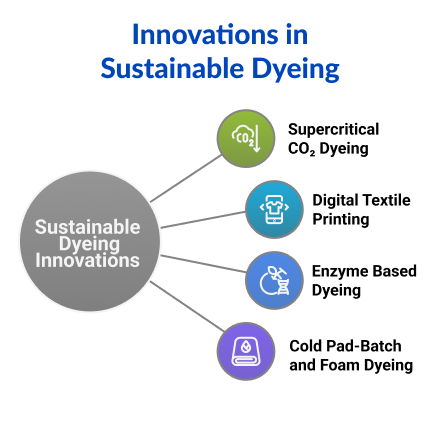
What if dyeing required no water? Waterless dyeing, like supercritical CO2 dyeing, allows this.
This uses pressurised carbon dioxide to dissolve dyes to get 98% dye uptake with zero wastewater.
Brands including Adidas and H&M do this and save up to 50% water & 50% energy over traditional methods.
For polyester and synthetics, this method eliminates effluent, which is great for sportswear and outdoor gear.
Inkjet dyes are sprayed directly onto fabrics via digital printing. This method saves 90% water and cuts chemical waste because there is no excess dye runoff.
A green dyeing company using digital printing, like Colourinn can make patterns for fashion or home textiles.
Enzymes break down impurities so dyes enter fabrics without harsh chemicals. For example, Colourinn enzyme solutions cut chemical use by up to 90% whilst preserving colour on cotton and blends.
In natural fibres like wool or linen, enzymes replace alkali treatments and extend fabric life. This reduces waste and also produces soft, comfortable textiles for everyday wear.
With cold pad-batch dyeing, reactive dyes are applied at room temperature and thus save energy and water by 40-60%. Foam dyeing uses air bubbles to transport the dyes.
| Method | Water Savings | Chemical Reduction | Energy Savings |
|---|---|---|---|
| Supercritical CO₂ | 95-100% | 40-50% | 40% |
| Digital Printing | 80-90% | 50% | 30-40% |
| Enzyme Based | 70-90% | 60-80% | 20-30% |
| Cold Pad-Batch/Foam | 40-60% | 30-50% | 50% |
Sustainable dyeing means better textiles, not water conservation. Why it matters:
Take a cotton shirt dyed with enzymes: It feels soft, looks vibrant and saves 50 litres of water compared with traditional dyeing.
Those are stories consumers want to hear. With plasma and supercritical CO2 gaining ground, these benefits extend in 2025 well beyond technical textiles for medical fabrics and automotive interiors, where durability meets sustainability.
Sustainable dyeing sounds nice, but it has its challenges. Equipment like CO2 dyeing machines costs millions of dollars, so small mills can not use this technology.
A few scalability problems are encountered for bio-based dyes, which require optimisation for large batch productions.
Performance challenges like lower colourfastness of natural dyes require ongoing R&D.
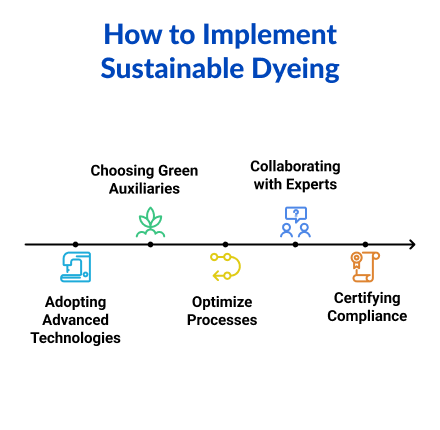
Transition to sustainable dyeing Eco-friendly practices need to be incorporated systematically into the dyeing process. Manufacturers can start by:

We at Colourinn Auxiliaries offer eco-innovation in dyeing. This guide covers everything from the environmental cost of traditional dyeing to implementation strategies via supercritical CO2 and bio-based breakthroughs.
We reduce water and chemical usage through advanced auxiliaries to achieve tough, vivid fabrics without harm.
Looking for sustainable dyeing? For customised sustainable solutions, contact Colourinn Auxiliaries today.
A. In textiles, dyeing is the process of adding color to fibers, yarns, or fabrics, using natural or synthetic dyes to achieve the desired shade and finish.
A. Sustainable dyeing uses innovative methods like CO₂ dyeing, digital printing, and enzyme-based processes to cut water, chemical, and energy use in textile production.
A. Depending on the method, sustainable dyeing can reduce water usage by 40% to 95%, making it ideal for water-stressed regions and eco-conscious manufacturers.