Catalogue Request Form…!

Wet rubbing fastness is the foundation of textile finishing, where fabrics maintain their color and quality when wet rubbing.
Its importance, testing methods, influences and advanced textile finishing chemicals that improve performance are discussed in this article.
Everything from apparel to upholstery will be explored regarding how functional finishes for textiles prevent color bleeding.
Find out how Colourinn Auxiliaries provides sustainable solutions for superior textile finishing.
Fastness of wet rubbing is an important quality control in textile finishing to ensure color retention and quality under wet friction. The importance lies in both functionality and consumer trust:
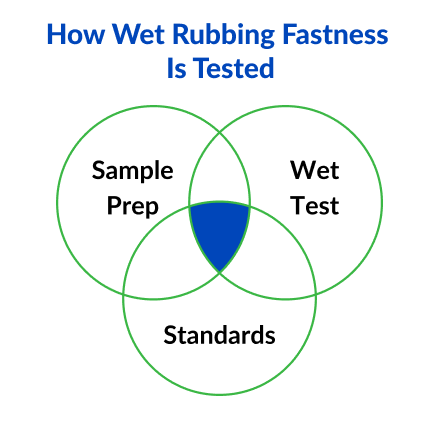
Testing wet rubbing fastness uses standardised methods of color transfer evaluation. The most common is a crockmeter, which presses a damp white cotton cloth against a sample of fabric. Gradient of color transfer on a Grey Scale of Staining, 1 (high color transfer) to 5 (no transfer). Key aspects include:
A 3-4 grade is generally OK for wet rubbing, although darker colors get lower scores because of higher dye loads.
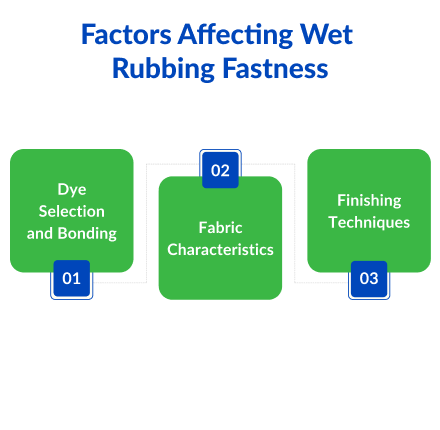
Wet rubbing fastness is influenced by a number of factors in textile finishing which affect the binding of dyes with fibers. Knowing these helps manufacturers optimize fabric finishing processes.
Reactive and direct dyes, found in cellulose fibres, often have water-soluble groups that dissolve in wet rubbing and reduce fastness. A good dye choice and fixation treatment reduce this risk. A major cause of color transfer is unfixed “floating” dyes.
Fabric structure and fibre type are important. As an example, short fibre cotton or rough cotton fabrics will abrade and transfer color when rubbed wet. Using combed or mercerised cotton improves fastness by removing loose fibres.
Finishing chemicals such as fixatives and silicone softeners increase wet rubbing fastness. Silicone softeners act as a protective layer to reduce friction, and cationic fixatives strengthen dye-fibre bonds.
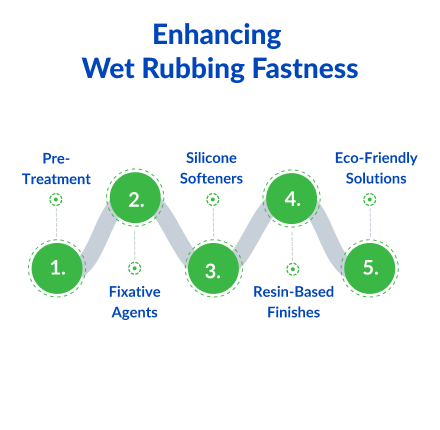
Optimal use of finishing chemicals and processes is required to improve wet rubbing fastness. Here are key approaches:

Obtaining robust wet rubbing fastness in textile finishing faces several challenges:
Wet rubbing fastness is a priority at Colourinn Auxiliaries for textiles that are colorfast and durable.
This guide has reviewed its importance, testing methods, and advanced textile finishing chemicals like fixatives and silicone softeners, enhancing fabric finishing.
Our solutions ensure fabrics resist wet friction while meeting industry standards and consumer demands.
Want to make your textiles stand out with functional finishes for textiles of the very highest calibre? Explore new textile finishing chemicals from Colourinn Auxiliaries. Learn how we can help you create vibrant fabrics that last.
A. Wet rubbing fastness refers to a fabric’s resistance to color transfer when rubbed while wet. It is a key quality parameter in textile finishing, ensuring that dyes do not bleed or fade during washing, sweating, or rain exposure.
A. It helps maintain the color integrity of fabrics, improves product durability, and enhances consumer satisfaction. Strong, wet rubbing fastness reduces staining of other garments and minimizes returns or complaints.
A. Wet rubbing fastness is tested using a crockmeter, where a damp white cloth is rubbed against a fabric sample. The degree of color transfer is rated on a scale from 1 (poor) to 5 (excellent), using ISO 105-X12 or AATCC 8 standards.