Catalogue Request Form…!

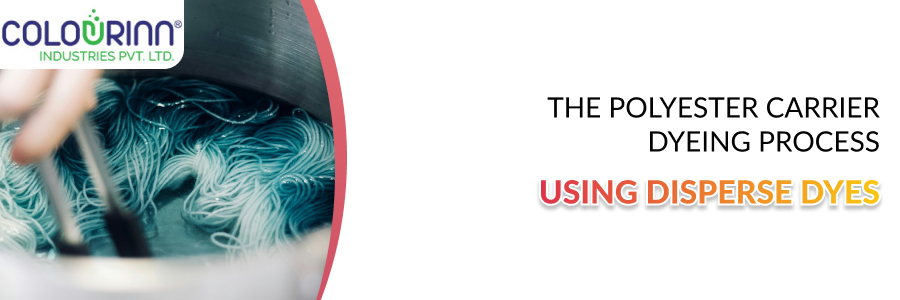
The world of textile manufacturing is complex and fascinating, involving a plethora of techniques to achieve the final product. One such method is the polyester carrier dyeing process using disperse dyes. This article explores the process and the crucial role of disperse dyes, aiming to demystify the procedure for both industry insiders and curious laymen.
Ever wondered how the vibrant colors on polyester fabrics are achieved? The secret lies in the dyeing mechanism, a fascinating process that transforms white fabric into a canvas of colors. At the heart of this transformation are disperse dyes, specially formulated for coloring synthetic fibers like polyester.
This step-by-step journey from dye bath to dyed fabric illustrates the delicate balance of chemistry and temperature control behind the scenes of textile dyeing.
Why does temperature matter so much in dyeing polyester fabrics? The answer is quite simple yet profound in its impact on the dyeing outcome.
This step-by-step journey from dye bath to dyed fabric illustrates the delicate balance of chemistry and temperature control behind the scenes of textile dyeing.
Have you ever pondered how deep, uniform colors are achieved on polyester fabrics, a material known for its resistance to dyeing? The carrier dyeing method is the unsung hero in this process, facilitating the dyeing of polyester at temperatures that would otherwise be insufficient for penetrating the fiber.
However, selecting the right carrier is crucial. Factors such as carrier efficiency, cost, impact on light fastness, and environmental considerations play a vital role in determining the best choice for a specific dyeing project.
Why are disperse dyes the preferred choice for dyeing polyester fabrics? The answer lies in their unique properties and the challenges posed by polyester’s hydrophobic nature. Disperse dyes are non-ionic, which means they do not dissolve in water but can be finely dispersed to ensure even coloration without the need for high solubility.
The textile industry is continually seeking ways to improve the environmental profile of dyes while maintaining their effectiveness. Eco-friendly disperse dyes that offer reduced water and energy usage are becoming increasingly popular spearheaded by companies like Colourinn, a leading Dispersing Agent supplier in India.
After the dyeing process, ensuring that the color is fixed properly and the fabric properties are optimal is crucial. This is where heat setting comes into play, a post-dyeing process that stabilizes the dimensions of the polyester fabric and enhances its physical properties.
ColourInn stands at the forefront of this innovative dyeing process. As a leading dispersing agent manufacturer in India ColourInn offers a wide range of textile dyes and auxiliaries that cater to the needs of modern textile manufacturing. With a commitment to quality and innovation, ColourInn continues to support the textile industry in achieving vibrant, long-lasting colors on polyester fabrics.
Through the careful application of disperse dyes and the carrier dyeing method, ColourInn not only ensures the production of beautifully dyed fabrics but also champions sustainable and efficient dyeing processes. The journey from dye preparation to the final coloration of polyester fabrics showcases the intricate balance of chemistry, temperature control, and professional expertise, making ColourInn a trusted partner in the textile industry.
A. Disperse dyes suspended in a carrier medium are used in the polyester carrier dyeing method to color polyester fabrics. Excellent color fastness and uniform color distribution are guaranteed by this procedure.
A. In contrast to conventional techniques, the polyester carrier dyeing method makes use of a carrier medium to uniformly distribute the dye molecules throughout the polyester fibers, producing coloration that is bright and durable.
A. Disperse dyes are made specifically to color synthetic materials such as polyester. They are perfect for the polyester carrier dyeing process since they are highly soluble in organic solvents and have a low solubility in water.