Catalogue Request Form…!

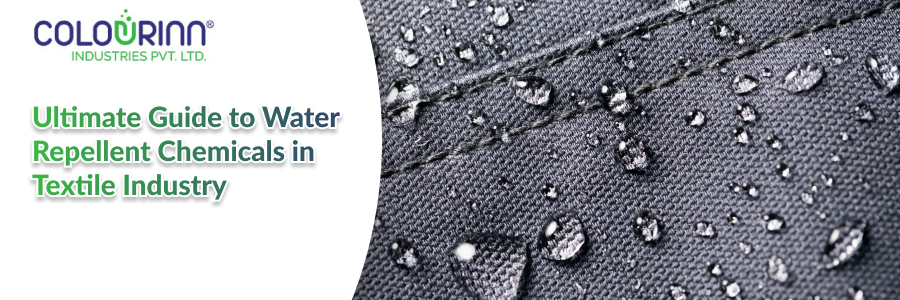
Water repellent chemicals transform textiles, making them water resistant while breathable and comfortable.
This guide covers their role in the textile industry, from fluorocarbons and silicones to outdoor apparel and technical fabrics. We’ll also look into environmental concerns and sustainable alternatives, with Colourinn Auxiliaries offering innovative water repellent chemicals textile solutions.
Join us to discover how these chemicals improve fabric durability and performance while meeting modern sustainability demands.
Water repellent chemicals are special substances applied to textiles to prevent water absorption. By reducing the fabric’s surface energy, they cause water to bead up and roll off instead of soaking in.
These chemicals are essential in creating fabrics that can withstand rain, stains and moisture while remaining breathable. In the textile industry, water repellent chemicals textile applications ranging from outdoor gear to medical textiles, ensuring functionality without compromising comfort.
The science behind water repellent chemicals is hydrophobicity. These chemicals coat fabric fibres, creating a low-energy surface that repels water. Unlike waterproof coatings that block air and vapour, water-repellent finishes allow breathability, making them perfect for apparel. Common mechanisms include:
The different water repellent chemicals found in textiles have different properties and applications. Understanding differences helps manufacturers select the right solution for their needs.
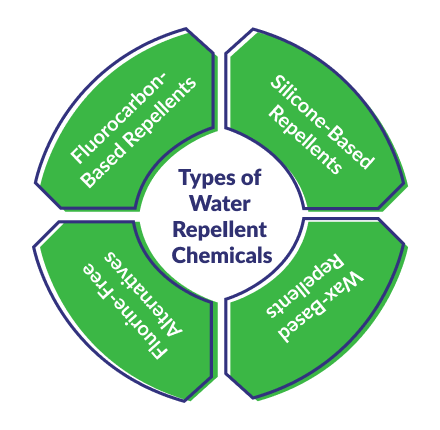
Fluorocarbons (C6 and C8 chemistries) are highly effective at repelling water and oil. They form a low-energy film on fabrics for outdoor wear and technical textiles,. Nevertheless, concerns about the PFOA and PFOS long-chain alternatives have moved to shorter chains.
Silicone finishes have good water repellency and flexibility while maintaining fabric softness. They are eco-friendly than fluorocarbons and are used for water repellent chemicals in textiles for cotton and synthetic blends. They are thermostable and UV-resistant for outdoor use.
Wax-based finishes, one of the oldest methods, provide affordable water repellency but lack durability, often washing out over time. Suitable for less demanding applications such as casual wear.
Emerging fluorine-free options, like nanoparticle coatings and bio-based waxes (e.g. beeswax, chitosan), offer sustainable water repellent chemicals with reduced environmental impact. These are gaining popularity in eco-conscious markets.
| Type | Pros | Cons | Applications |
|---|---|---|---|
| Fluorocarbon | High water/oil repellency, durable | Environmental concerns | Outdoor gear, workwear |
| Silicone | Eco-friendly, soft handle | Limited oil repellency | Apparel, home textiles |
| Wax | Cost-effective | Less durable | Casual wear |
| Fluorine-Free | Sustainable | May require frequent reapplication | Eco-friendly textiles |
Explore innovative textile finishing chemical solutions designed to improve fabric texture, durability, and appearance for modern applications.
Water repellent chemicals are used in various industries to enhance functionality and durability. Key applications are:

Water repellent chemicals improve textile performance but are increasingly environmentally harmful. C8 chemistries are associated with bioaccumulation and toxicity and are banned in many regions. The industry is responding with sustainable alternatives:
So manufacturers need to compromise performance for sustainability and look to eco-friendly water repellent chemicals and textile solutions to meet consumer and regulatory demands.
Applying water repellent chemicals requires precision for uniform results. Common methods are:
Fabrics must be clean and free of residues (e.g. surfactants, oils) to avoid impairing repellency. The ph of 4-5 during application enhances effectiveness.
The effectiveness of water repellent chemicals can diminish due to wear, dirt or laundry. To maintain performance:

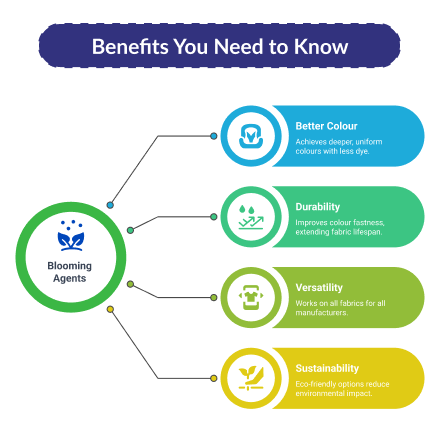
For example, Colourinn’s silicone-based blooming agents are perfect for polyester, for vibrant colours and a soft feel.
The future of water repellent chemicals textile solutions lies in innovation and sustainability. Emerging trends are:
These will give better durability and reduced environmental impact as per the global sustainability goals.
At Colourinn Auxiliaries we understand the magic of water repellent chemicals in textiles. This guide has covered types, applications and sustainable innovations of water repellent chemicals and how important they are in creating durable and functional fabrics. Our commitment to quality ensures our water repellent chemicals textile solutions meet industry standards from outdoor apparel to technical textiles.
Ready to get your textiles eco-friendly and high-performance water repellent solutions? Contact Colourinn Auxiliaries to know more about our products and get a clear picture of how we can help you in your textile production with sustainable and reliable finishes. Let’s create fabrics that can withstand the elements together!
A. Water repellent chemicals are used in the textile industry to create fabrics that resist moisture, keeping garments dry and enhancing their durability.
A.Modern water repellent chemicals are designed to be both fabric-safe and environmentally friendly, with many manufacturers moving into non-fluorinated, sustainable options.
A. Yes, water repellent chemicals can be applied to a wide range of textiles including cotton, polyester, nylon, and blended fabrics, depending on the formula.