Catalogue Request Form…!

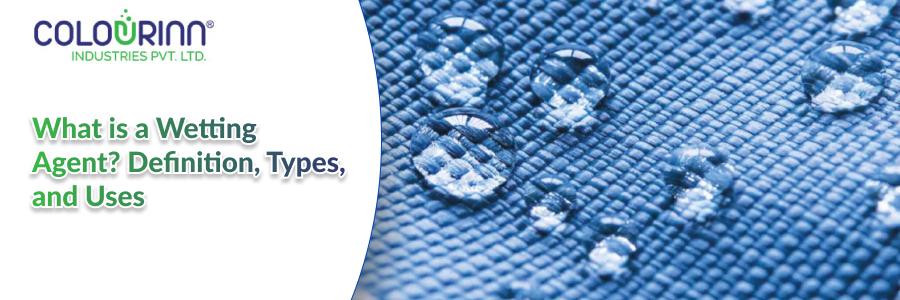
Wetting agents lower the surface tension of liquids, allowing them to spread more easily and penetrate more surfaces.
In textiles, coatings and agriculture, they are used for dyeing, painting and pesticide application.
This article defines the types and applies wetting agents to textile processing while also describing their benefits and functionality.
Find out how a wetting agent manufacturer like Colourinn delivers quality and sustainability solutions for industrial processes.
A wetting agent is a type of surfactant that reduces the surface tension of a fluid, usually clean water, so it spreads much more readily over a surface area.
This gives water a very high surface tension (72.8 mN/m at 20°C), which prevents it from penetrating or adhering to lots of materials.
Wetting agents disrupt the cohesive forces between water molecules so they can interact with surfaces like fabrics, pigments or plant leaves.
They are useful agents when uniform liquid application is required. For example, in textiles a wetting agent ensures that dyes enter fibers evenly so they turn out even colors.
Wetting agents lower the surface tension in all sorts of industrial applications and are therefore indispensable.
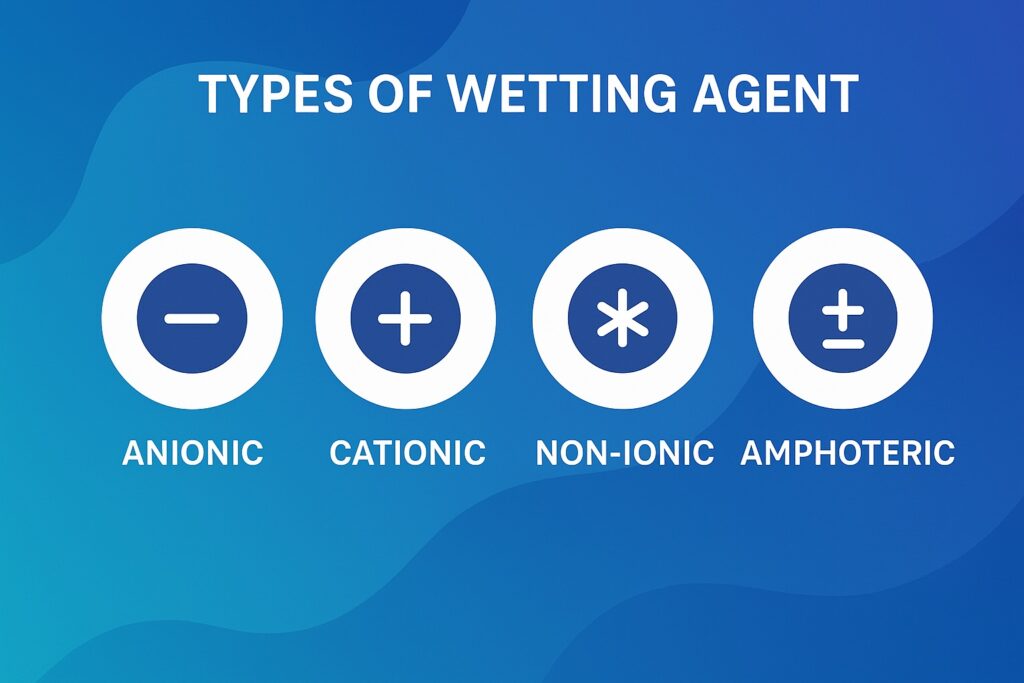
Wetting agents exist in several different types, depending on their chemical properties, which are appropriate for specific applications. Knowing these kinds of agents helps industries select the right agent for their situation.
Wetting agents are adsorbed at the interface between a liquid and a surface to decrease cohesive forces in the liquid.
This lets the liquid spread out and enter materials. In textile dyeing, for example, a wetting agent for textiles ensures that the dye solution thoroughly wets the fabric to prevent patchy results.
Wetting agent efficiency is often determined by surface tension tests, which determine how much the agent lowers the surface tension of the liquid.
All this data helps a wetting agent manufacturer optimize formulations for specific industries.
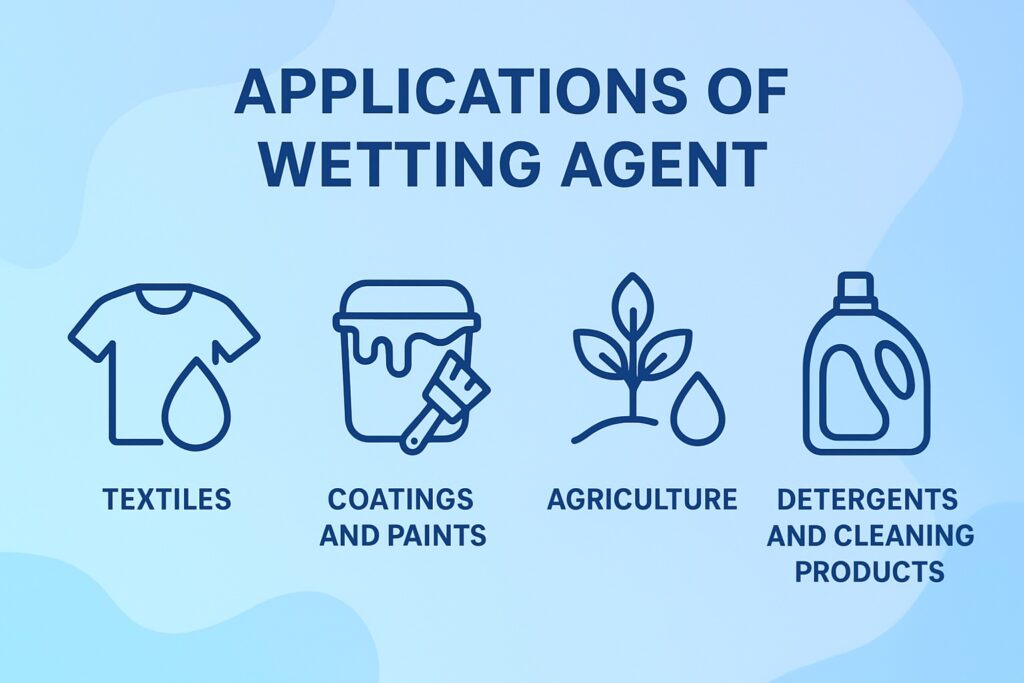
Wetting agents have different industrial applications that all benefit from improving liquid performance. Here are some key applications:
Low foaming wetting agents are especially appreciated at high speed dyeing machines where they also help to limit the formation of foam and reduce fresh water consumption.
Wetting agent manufacturer like Colourinn are key to developing tailored solutions. And through research and high manufacturing standards, they produce wetting agents that meet industry needs.
As an example, to formulate a low foaming wetting agent, one must balance performance with low foam generation, which skilled manufacturers solve through innovation.
These manufacturers also produce eco-friendly wetting agents. By cooperating with sectors like textiles and agriculture, they make sure that their products meet modern demands for quality and responsibility.

At Colourinn we know the transformative power of wetting agents in textile and coatings, in addition to agricultural industries.
This article discussed what a wetting agent is and its types, as well as its applications, ranging from dye absorption improvement in textiles to pesticide spread improvement in farming.
Our quality commitment makes our wetting agents (such as Textile & Low Foaming Specialized wetting agents) high performers & sustainable products.
Want to upgrade your processes with premium wetting agents? Contact us now to find out about our textile auxiliaries and how we can make your results vibrant, efficient & eco-friendly.
A. Wetting agent is a surfactant that reduces surface tension, allowing liquids to spread and penetrate surfaces effectively.
A. The main types are anionic, cationic, non-ionic, and amphoteric, each suited for specific industrial applications.
A. To make a textile wetting agent, dissolve a suitable surfactant (usually non-ionic) in water, mix thoroughly, and add stabilizers or emulsifiers if needed.