Catalogue Request Form…!

In textile dyeing and finishing, pH control is key to vibrant colours and durable fabrics. This article will explain why acid buffer solutions like sodium acetate buffer solution and acetic acid buffer are essential.
From stabilizing dye baths to improving colour fastness and sustainability, we’ll cover their mechanisms, types, applications and environmental benefits. See how Colourinn Auxiliaries uses buffering solution expertise to deliver better textile results.
An acid buffer is a chemical solution that resists pH changes, keeping textile dyeing and finishing stable. By maintaining the optimal pH, buffers like acetic acid buffer allow dyes to bond with fibers, preventing uneven colouration or fabric damage.
These solutions typically combine a weak acid (e.g. acetic acid) and its conjugate base (e.g. sodium acetate) to neutralise excess acidity or alkalinity.
Dyeing and Finishing involve complex chemical reactions which are hypersensitive to ph changes. An acid buffer maintains a regular atmosphere, so:
Acid dyes are used on nylon fabrics, silk, and wool by putting them on with a sodium acetate buffer solution, created from a mixture of acetic acid as well as sodium acetate.
Several buffering solution types are used in textile processing, each for specific dyes and fibers. Here are the most common:
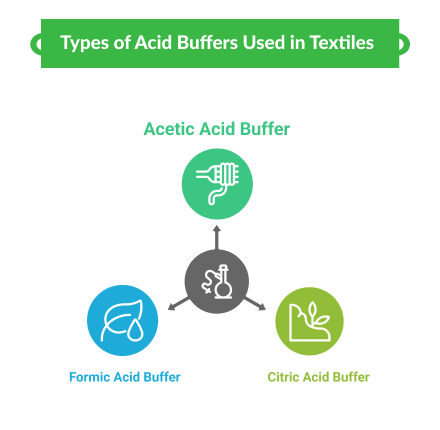
The sodium acetate buffer solution, made from acetic acid and sodium acetate, is used for acid dyes on wool, silk and nylon. It has a pH of 4-5, ideal for ionic bonding between anionic dyes and cationic fiber sites. This buffer gives bright, even colours with good fastness.
Citric acid buffers have a broader pH range (3-6) and are eco-friendly, reducing chemical waste. They’re used in reactive dyeing for cotton, to improve dye fixation and reduce environmental impact.
Formic acid-based acetic acid buffer solutions are less common but work well for neutralising alkaline residues post-scouring or bleaching. They’re cost-effective and water-saving, in line with sustainability.
| Buffer Type | Ph Range | Applications | Benefits |
|---|---|---|---|
| Acetic Acid Sodium Acetate | 4-5 | Acid dyeing (wool, silk, nylon) | Vibrant colours, excellent fastness |
| Citric Acid | 3-6 | Reactive Dyeing (Cotton) | Eco-friendly. High dye fixation |
| Formic Acid | 3-5 | Neutralisation, finishing | Cost-effective, low water use |
Also Read on, Why Dyeing is an Essential Process in Textile Manufacturing
Dyeing requires exact conditions for uniform colour and durability. An acid buffer does several jobs:
Textile Finishing enhances a textile’s feel, appearance and functionality. Acid buffer solutions are important here, too:
The textile industry is getting more and more focused on sustainability and the use of acid buffer solutions can help with that.
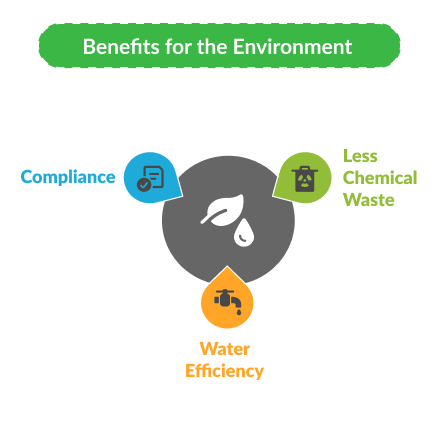
The sodium acetate buffer solution from Colourinn is sustainably produced and uses organic acids while maintaining performance and reducing environmental impact.
Choosing the right acid buffer depends on the type of dye, fiber and process used. Consider these factors:
Consult with Colourinn to get the right buffering solution for you.
Applying an acid buffer requires precision to get uniform results:
Maintaining the right ph balance is crucial to prevent over-buffering, which can cause colour fade and fiber weakness.

At Colourinn Auxiliaries, we realise the benefits of acid buffer solutions in textile dyeing and finishing. This particular manual indicates exactly how acetic acid buffer and also sodium acetate buffer solution control ph, boost colour fastness, protect fibers and also support sustainability. Our expertise provides you with vibrant, durable textiles which meet industry requirements.
Ready to upgrade your textile production with top-notch buffering solution products? Contact Colourinn Auxiliaries to check out our range of acid buffer solutions and see how we can transform your dyeing and finishing processes with quality and sustainability.
A. An acid buffer is a pH-stabilizing agent used in textile dyeing to maintain optimal acidity (pH 4–6). It ensures even dye absorption, prevents color variation, and enhances fabric quality.
A. Acid buffers provide a stable pH condition to enable dyes to firmly attach to the fibers, thus ensuring colorfastness, saving dye materials, and yielding efficient and bright colors. If pH levels fluctuate without the use of a buffer, the dye fiber bonds can weaken, setting the stage for color fading or bleeding.
A. Acetic acid and ammonium acetate are considered to be the best acid buffers for textile dyeing because they can maintain pH balance efficiently, restrict dye absorption, and ensure consistent color quality on the fabric.